Eyes Off the Road: The Hidden Danger of Phone Navigation and the Rise of Gig Drivers
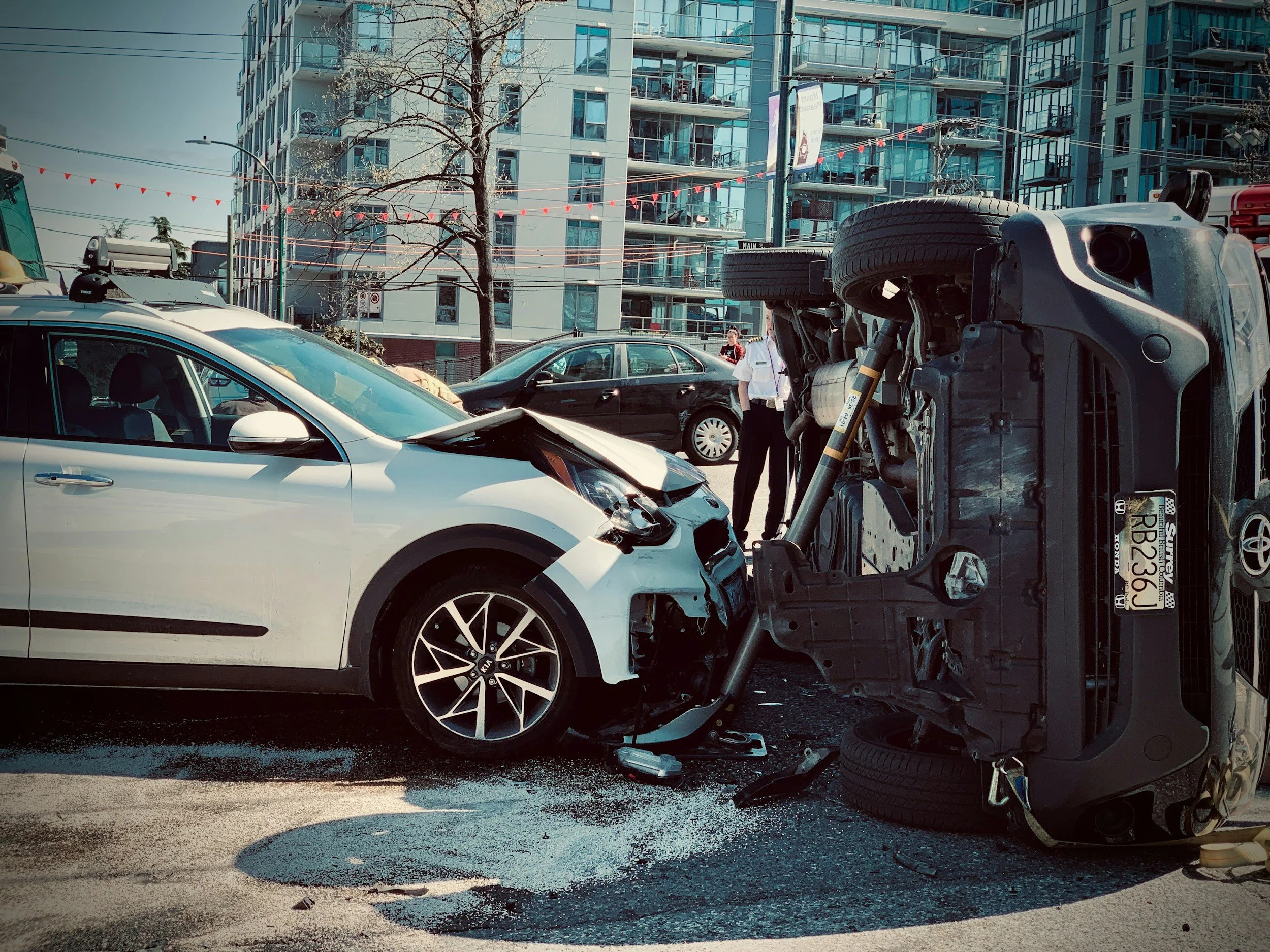
At McElroy Parris Trial Lawyers (MPTL), we have represented people whose lives changed in the two or three seconds it took another driver to look down at a map.
Navigation feels like the responsible choice. But using it can still take a driver’s attention away from the road. Holding a phone, reaching for a screen, or typing an address can turn an ordinary trip into a serious crash.
For rideshare and delivery drivers, the phone is also how they receive jobs, accept orders, and communicate with customers. Those tasks can put additional demands on their attention throughout the workday.
Why Seconds Matter
Researchers at the Virginia Tech Transportation Institute have spent years studying real drivers using in-car cameras and sensors. In a study involving more than 3,000 drivers, distraction was present during about half of normal driving and roughly doubled overall crash risk (Dingus et al., PNAS, 2016).
The length of each glance matters, too. In a study of newly licensed drivers, a single glance away from the road lasting more than two seconds was associated with 3.8 times the risk of a crash or near crash. When that glance involved a phone or another wireless device, the risk was 5.5 times higher (Simons-Morton et al.).
A European Commission review found that visual-manual phone tasks, including handheld texting, browsing, and dialing, increased crash risk by approximately 2.5 times (European Commission).
At 55 miles per hour, a car travels about 80 feet every second. Looking at a phone for two seconds means traveling roughly half the length of a football field without watching the road.
Phone or Built-In Screen?
A built-in screen is not automatically safe.
Research from the AAA Foundation for Traffic Safety and the University of Utah found that many factory-installed infotainment systems placed very high demands on drivers. Apple CarPlay and Android Auto produced lower, moderate levels of demand in the systems tested (AAA Foundation).
Even with CarPlay and Android Auto, navigation tasks took up to 33 seconds to complete. That does not mean drivers looked away continuously for 33 seconds, but it shows how long a task can compete for their attention (Deseret News).
How a driver uses the screen matters:
Holding and operating a phone can take the driver’s eyes off the road and a hand off the wheel.
Screen placement affects how long drivers look away. A University of Michigan study found that total eyes-off-road time was 12.8% greater with a low-mounted touchscreen than with a high-mounted one, and 26% greater when the screen was harder to reach (UMTRI).
Manual destination entry can impair driving more than voice input, according to a review of the research (National Transport Commission).
Voice commands do not eliminate distraction. Still, using a well-positioned screen through voice commands is different from repeatedly looking down to read offers, enter information, or switch between apps.
Gig Drivers and Distraction
App-based driving has grown rapidly. An industry-funded report estimated that 7.3 million people worked as active rideshare and delivery drivers on major U.S. platforms in 2022, with many using more than one app (Flex Association).
Company reports show the volume of activity these platforms handle:
PlatformReported activityUberMore than 40 million trips per day, reported with its fourth-quarter 2025 results (Uber).Lyft945.5 million rides in 2025, or approximately 2.6 million per day (Lyft).DoorDashApproximately 3.2 billion orders in 2025, or about 8.8 million per day (DoorDash).Instacart338.8 million orders in 2025, or approximately 930,000 per day (Instacart).
These figures cover different activities and markets. They do not tell us how many individual drivers are on U.S. roads each day, but they show how much transportation and delivery work now depends on apps.
For those drivers, navigation prompts, new job offers, and customer messages can arrive while the vehicle is moving. Some drivers also work through more than one app.
An Insurance Institute for Highway Safety survey of more than 2,000 drivers found that gig workers were more than twice as likely as other drivers to engage in distracting activities and nearly four times as likely to regularly use smartphone apps while driving. Programming a navigation app was the most common device-based activity among all drivers surveyed (IIHS).
A University College London study found that 40% of surveyed gig drivers and riders who used an app considered it distracting while driving. Some reported that alerts for new jobs contributed to the distraction (UCL).
Researchers studying the arrival of ridehailing in U.S. cities found an association with an approximately 3% increase in traffic fatalities. The study examined ridehailing’s broader effects; it did not establish that phone distraction caused the increase (NBER).
Across all drivers, the toll is substantial. In 2024, 3,208 people were killed and approximately 315,000 were injured in distraction-affected crashes. NHTSA cautions that distraction can be difficult to identify and record after a crash, which limits what the data can tell us (NHTSA).
California Law and Your Case
California Vehicle Code § 23123.5 generally prohibits holding and operating a handheld phone or electronic wireless communications device while driving, unless it is configured for voice-operated, hands-free use and used that way.
Limited manual use is permitted when the device is properly mounted on the windshield, dashboard, or center console without obstructing the driver’s view, and the driver activates or deactivates a feature with a single swipe or tap. Manufacturer-installed systems embedded in the vehicle are exempt from this particular statute (California Vehicle Code § 23123.5).
An interaction that requires scrolling, typing, or multiple taps may fall outside that limited allowance. Whether a particular interaction violates the law depends on the facts.
If you were injured in a crash involving a rideshare or delivery driver, phone and app records may be important evidence. Available records may help establish whether the driver was logged in, handling a trip or delivery, receiving an offer, or interacting with an app shortly before the crash.
Those records may also help determine which insurance coverage applies and whether there is a basis for a claim against a company involved in the trip. A company’s responsibility depends on the evidence and applicable law; it is not automatic simply because the driver was using its app.
At MPTL, we investigate beyond the driver when the facts warrant it. How a company sends offers, sets delivery demands, and requires drivers to interact with its app may deserve close examination.
Relevant evidence can become harder to obtain over time. Speaking with an experienced trial lawyer early can help ensure that steps are taken to seek and preserve available records.
Contact Our Team
When life changes in an instant, we’re here to help.
If you or someone you love was injured in a crash involving a rideshare or delivery driver, we would be honored to listen. Call McElroy Parris Trial Lawyers at (805) 272-4001 to speak with our team.
We listen. We care. We demand justice.
This article is for general informational purposes only and is not legal advice. Every case is different. Please contact an attorney about your specific situation.